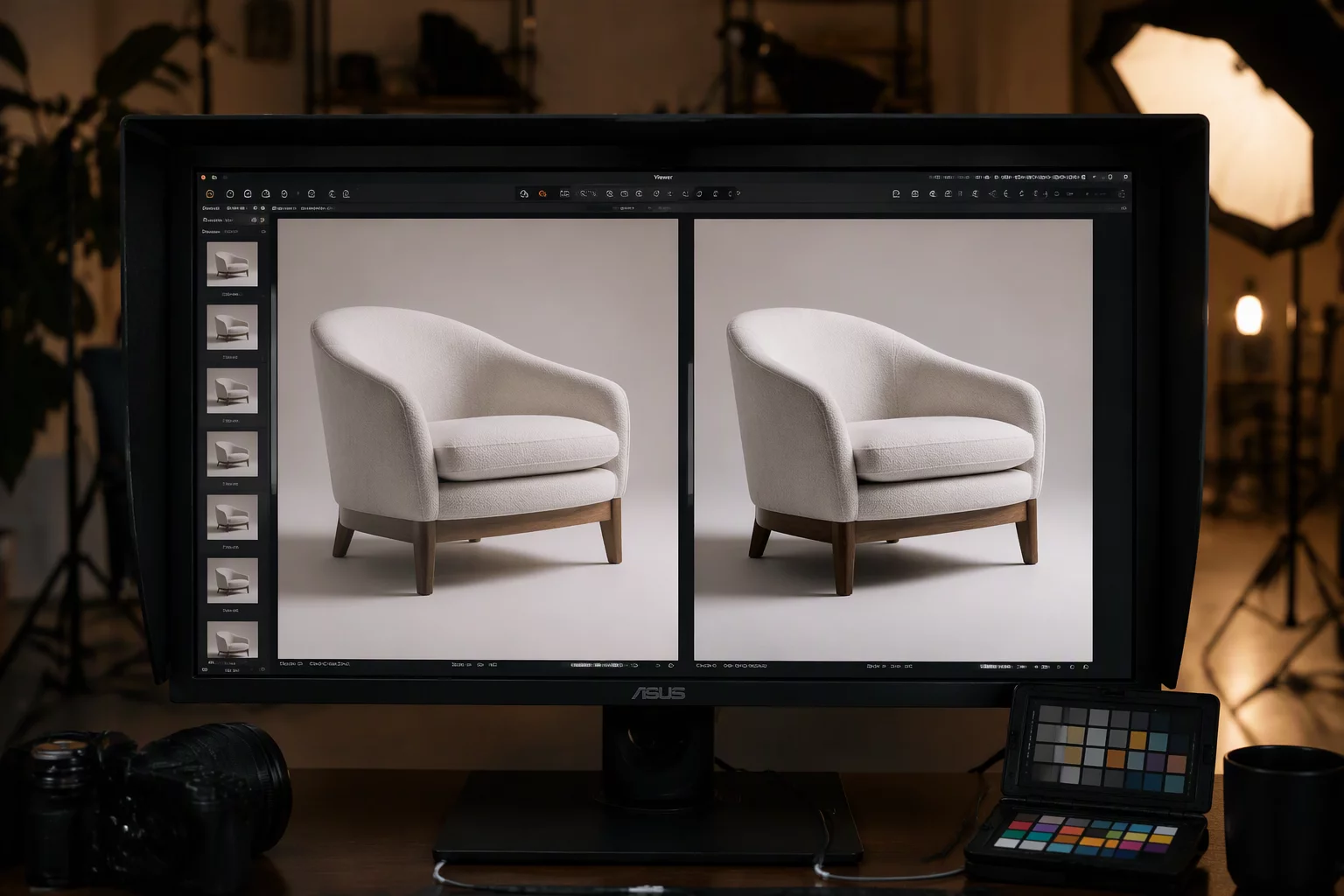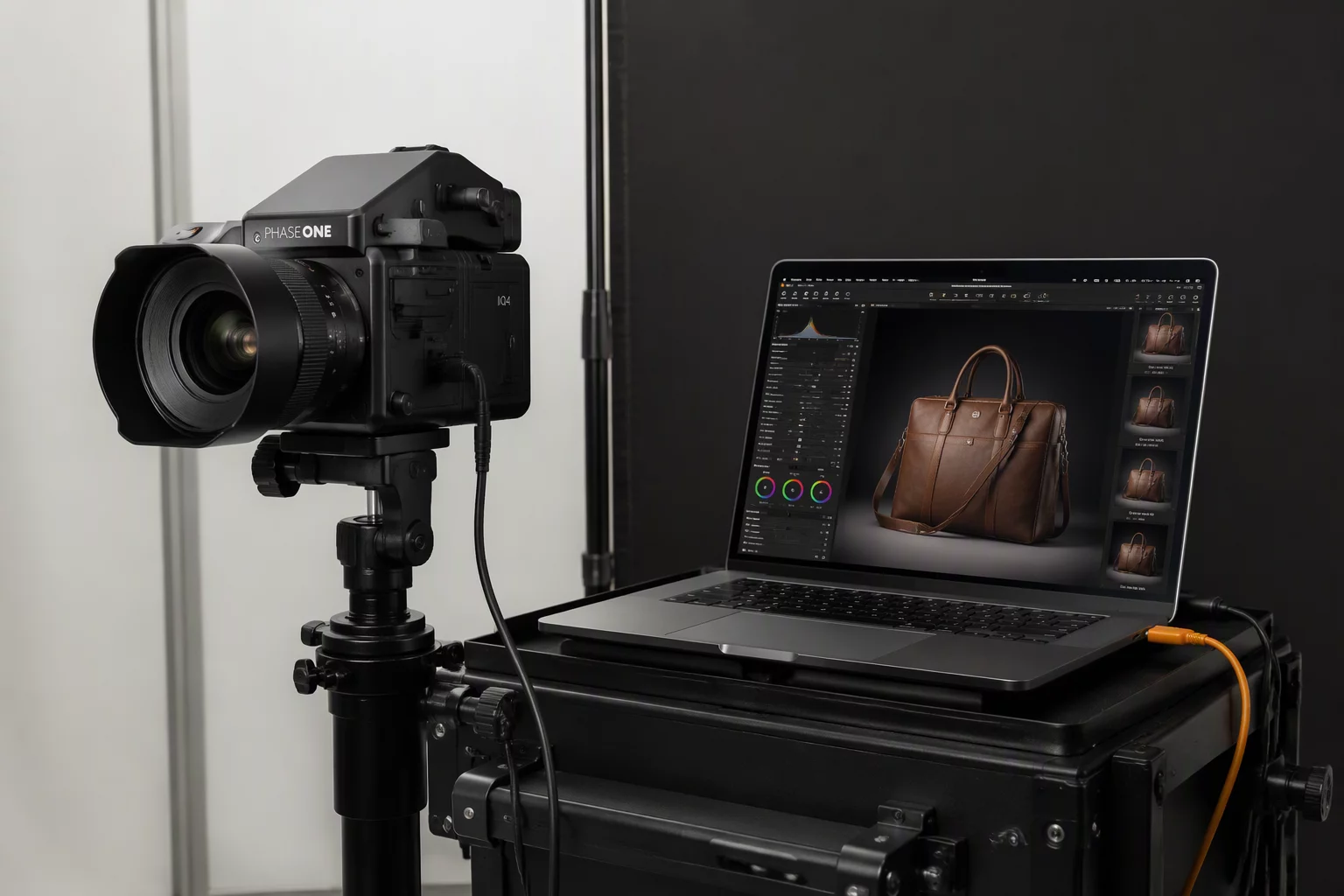
The Real Cost of a Fast Frame
The arithmetic is brutal and asymmetric. Skipping a checkpoint saves perhaps eight seconds. The failure it allows — a drifted product, a rotated label, an unapproved styling change — costs a reshoot measured in tens of minutes plus crew standing time. Across a full catalog day, the "fast" workflow is frequently the slower one.
The alternative is not to inspect every frame like a final. It is to know exactly which frames earn a full audit: the first frame after any physical change, the first frame of a new variant, and a periodic sample inside long stable bursts.
When to Slow Down and When to Run
High-yield inspection windows cluster around change events. Everything else runs hot.
“Nobody remembers the five seconds you saved skipping the check. Everybody remembers the forty minutes you lost reshooting.”
- Full audit after any lighting, product, styling, or camera adjustment.
- Full audit on the first frame of every new shot-list item.
- Sampled audit every 8–12 frames inside a stable burst.
- Client-gated audit before any set change is approved for teardown.
Why Trained Crews Check Faster
A rehearsed 5-point check — focus, framing, light, styling, next-action decision — is muscle memory. The digital tech calls each point aloud in a fixed order, the answers are binary, and the whole loop closes inside ten seconds. Crews that improvise the check are not faster; they are just inconsistent about what they skip.
This is also why checklist discipline scales: a junior tech running a fixed protocol outperforms a senior tech freelancing, because the protocol never forgets a point at 6 PM on hour ten.