What Makes a Frame Useful
Frame 22 was the one that ended up in the portfolio. Perfect light, perfect styling, product dead on register — and precisely because everything was already right, it answered no open question. Frame 23, shot after a minor flag adjustment, was the one that revealed the fill spill the crew then corrected. One was admired; the other was used.
Usefulness is measurable: a frame earns its keep by the quality of the decision it produces. A checkpoint that says "change nothing, proceed" is just as valuable as one that catches an error — both close a question.
The Trap of Reviewing for Beauty
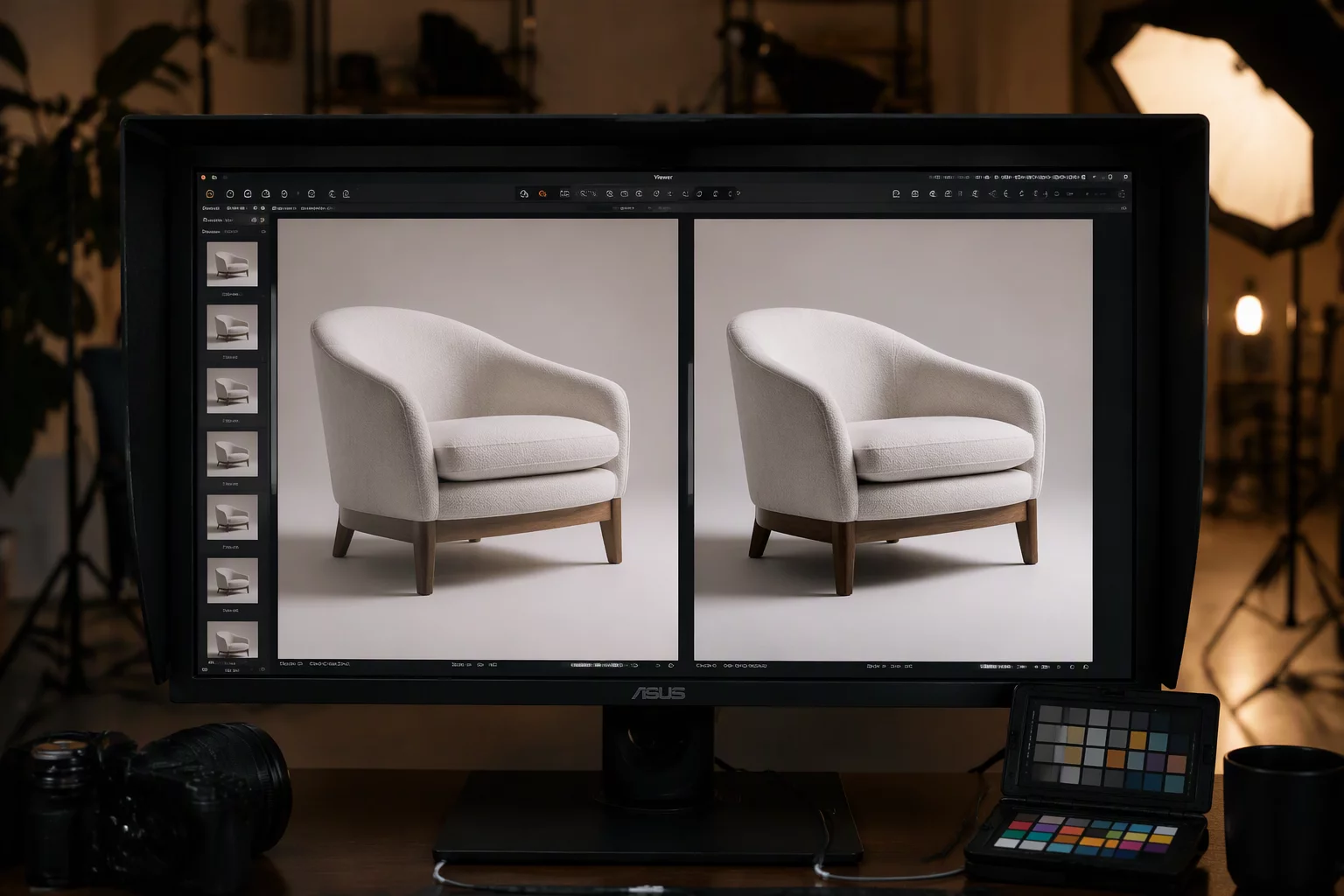
When the monitor becomes a gallery, the review stops being an audit. Crews linger on the frames that flatter the work and skim the frames that interrogate it. The marginal errors — a label two degrees off, a specular line thinning at the edge — live in the skimmed frames.
“The best frame of the day was the one we never had to reshoot — not the one that looked best on the monitor.”
- Audit frames in capture order, not in order of attractiveness.
- Give every frame the same fixed questions before giving any frame a second look.
- Save portfolio thinking for the shoot-end selection pass.
Scoring Frames by Information
A simple test for any review habit: after looking at a frame, can someone on the crew state what it proved or disproved? If the answer is only "it looked great," the frame was consumed as entertainment, not as a checkpoint.
The frames that build sessions are boringly informative: focus held, register held, light matched reference, client approved. The heroes get selected at the end — from a pool made trustworthy by every unglamorous checkpoint that came before them.