Flat Meters, Rotated Product
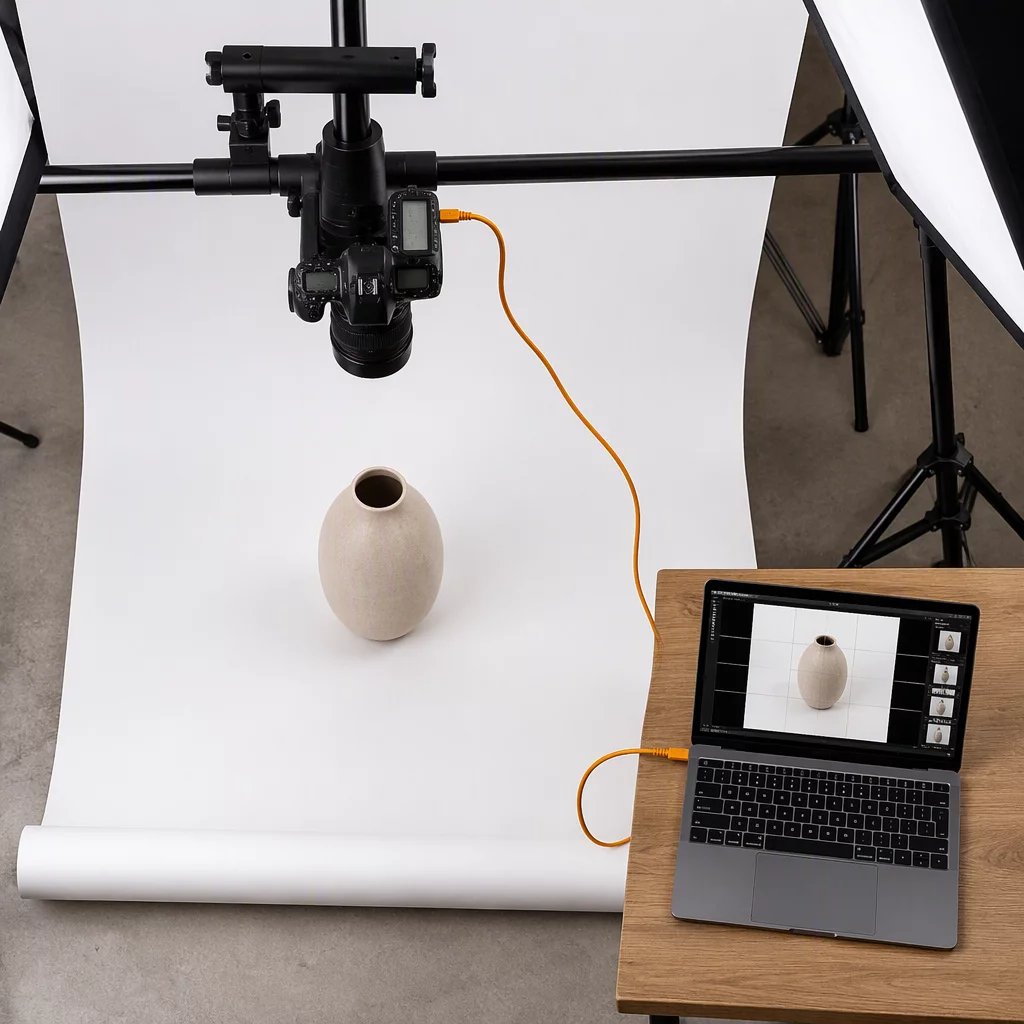
Capture 14 landed exactly on spec: label centered on the vertical datum, strip highlight clean, meter dead flat. Between frames an assistant nudged a modifier stand and the bottle turned with it. Capture 15 arrived with an even better specular rim — and a label rotated +4.8 degrees off axis. Nobody caught it on set because the lighting audit, the only check being watched, showed zero variance.
The exposure chain and the mechanical chain are independent systems. Light continuity tools report on photons; they cannot see degrees of rotation. Treating a flat meter as a green light for the whole frame is how a small drift becomes a full packaging reshoot.
Why Perfect Exposure Hides the Problem
The insidious part of this failure is that the improved highlight actually rewarded the mistake. The new rim looked so clean that the team was tempted to lock the lighting change in place — which would have anchored every later frame to a misaligned product axis.
“The light was doing exactly what we asked. The product just wasn’t where we left it.”
- Specular improvements draw attention away from product register.
- Label rotation breaks legal copy legibility even at identical exposure.
- Client-approved angles are contractual, not aesthetic preferences.
Fix Position Before Touching Light Again
The correct response on capture 15 was to stop the sequence, reset the turntable stop to 0.0 degrees, and re-verify the label against the locked overlay. Only after the geometry passed did the crew keep the improved lighting modifier — which then had to be re-metered once anyway, because repositioning the bottle changed the specular path a second time.
This is the core rule the featured case teaches: fix the product position before changing lighting again. One variable at a time, in the right order, keeps cause and effect readable for the rest of the session.